Intake gaps
Units arrive. Fields stay empty. The row is booked after the device has already moved.
ITAD & Refurbishment · Intake & risk
ERP stays the system of record. The bench stays the bench. FehrWatch fills the gap at intake: serials, risk signals, market ranges.
Signal only. Human approval stays mandatory. No full ERP migration.
A. The segment
For ITAD and refurbishment teams with high volume, multiple sites, and production pressure. ERP on one side. Pack table on the other. The gap is intake.
ERP → FehrWatch → Workbench / Workflow
B. The problem
ERP master data is built for stock, not for a scratched tag at 18 lux. The bench still runs on lists, photos, and memory.
Units arrive. Fields stay empty. The row is booked after the device has already moved.
Typed serials drift. Mismatched, truncated, or swapped numbers pass until a later station fails.
Scratched coating, smear, low light. Camera OCR that only works on clean labels is useless here.
Buy or hold is decided without a range from device data and condition. The ERP SKU does not carry that.
Technical and commercial risk shows up after money has left the table — or after the unit is already in process.
Excel between warehouse and buying. Copy-paste. Version drift. No single row at the bench.
The ERP stays the system of record. It does not read a damaged asset tag or attach a market range to the unit on the table.
Intake gaps, unreadable tags, lists that lag the pallet. The shop floor does not wait for a clean master record.
C. The solution
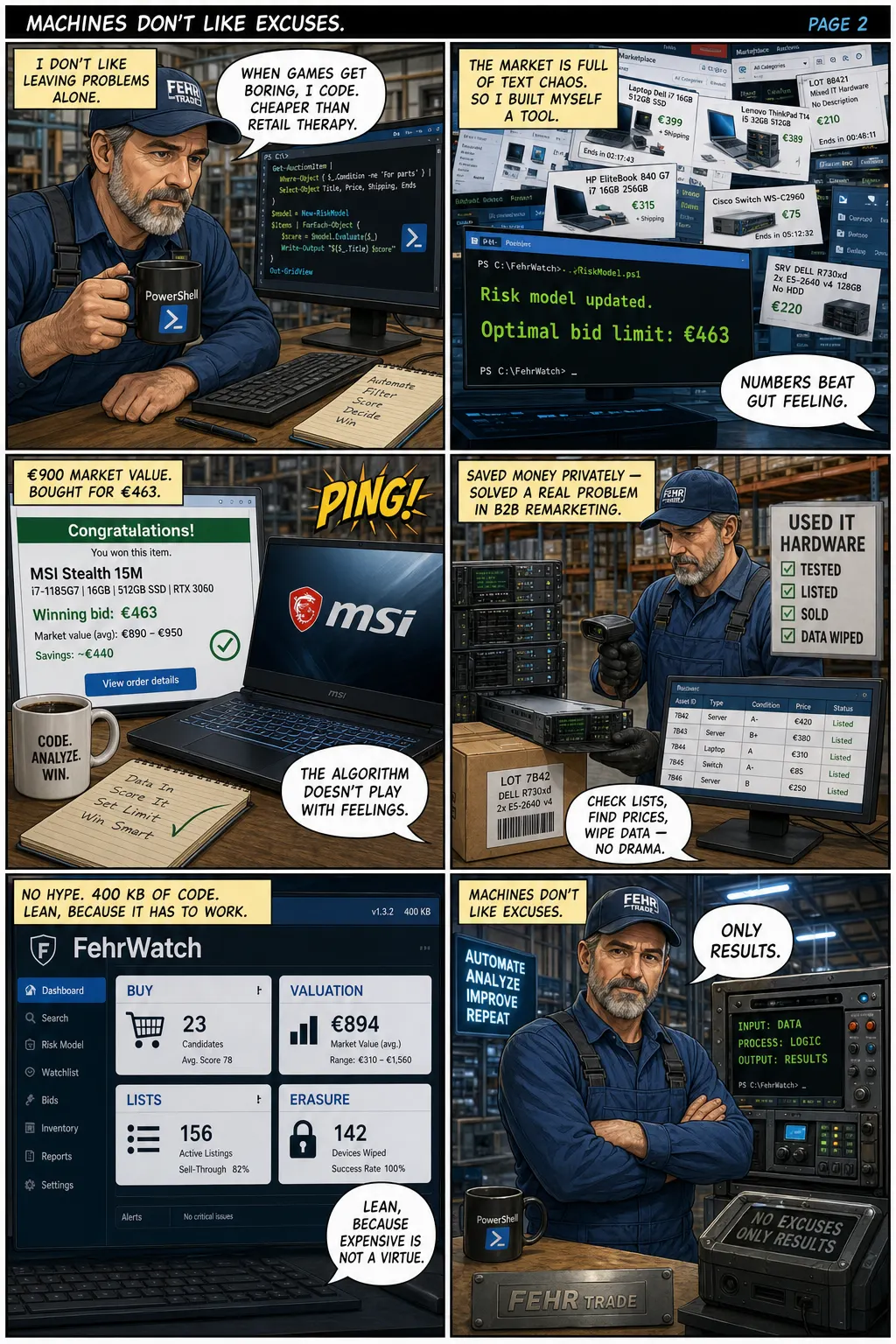
The Other ERP: intermediate module between ERP and workbench. Process ownership stays where it already is.
Automates the gaps — intake, serials, market indicators, lists.
Technical and commercial risk signals on the device before money leaves the table. Signal — no auto-buy.
OCR for damaged tags — fields into the row, not into a tool maze.
Market-based ranges and buy guidance from device data and condition. Decision support. Not a price guarantee.
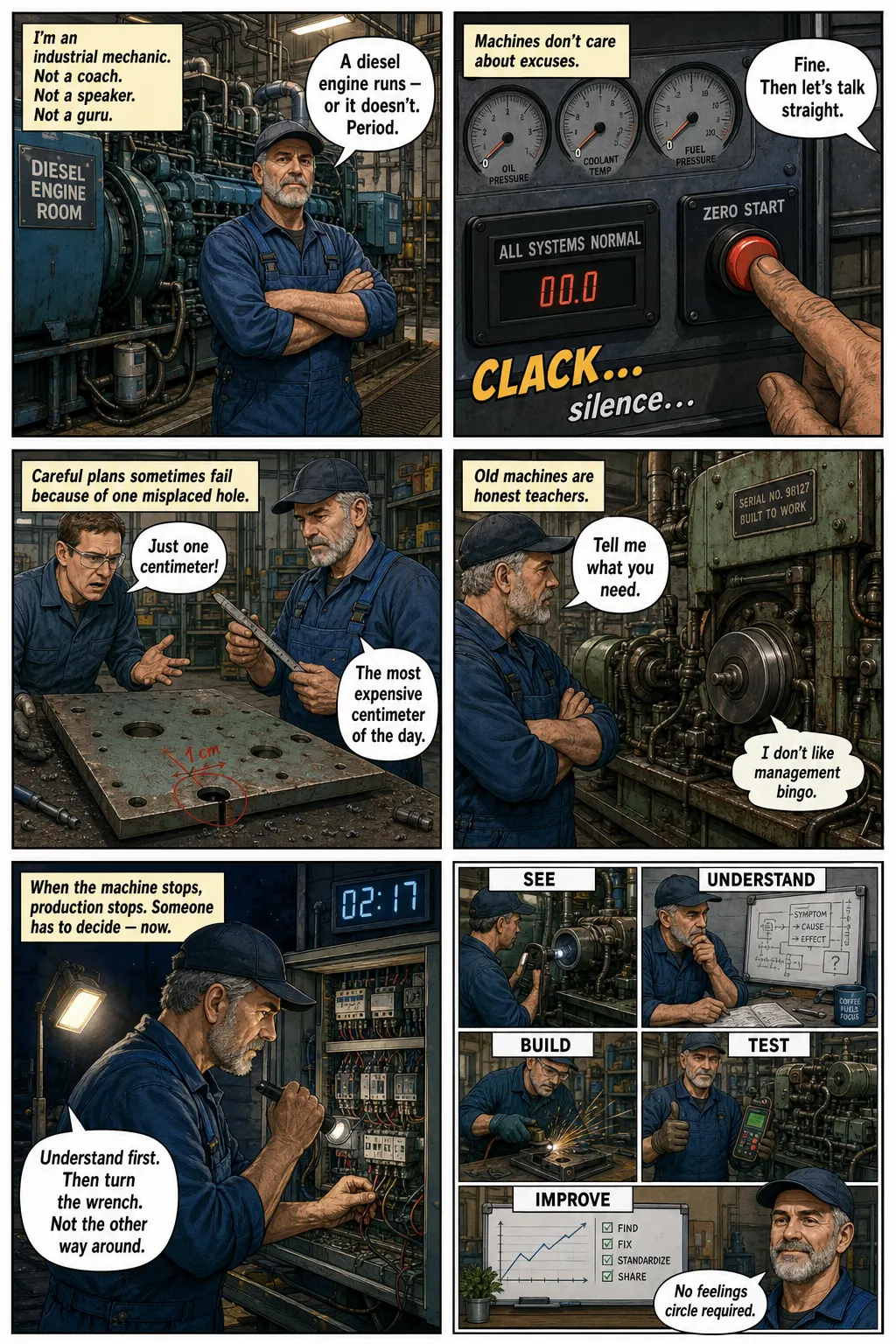
A gearbox that holds under load — not a half-finished module.
D. Intake & risk on screen
Camera on the tag. Fields in the list row. Risk and market range on the same unit — before the pallet moves on.
E. Technical depth
Four Working Views from intake to market indicators. Real FehrWatch screenshots.
Broken, mismatched, or unreadable serials at capture. Camera instead of retyping.
Scan result into the row: model, serial, detected fields. Risk sits on the device, not in a side tool.
Batches and inbound devices in one list. Status at intake — not a second spreadsheet.
Ranges from device data and condition. Decision support. Not a purchase guarantee.
Buy-aid on the listing. USD next to the DE product. Overlay, not a second ERP.
Monthly module between ERP and bench. No full migration. Camera OCR is add-on where tags fail.
F. Next step
Open the workbench or request a walkthrough of intake and risk on real rows.
No credit card. Human approval stays mandatory. Market values are non-binding decision aids.